Discover Independent Schools
Why independent education matters — and how to find where your child belongs.
Choosing a school is about more than just academics; it’s about finding a community where your child feels seen, supported, and challenged. This guide is designed to help you understand the landscape of independent education and provide a clear framework for finding the right fit.
An independent school is a private, nonprofit educational institution governed by an autonomous board of trustees and funded through tuition, endowments, and charitable donations. Unlike public schools, independent schools are free from government oversight regarding curriculum, teacher credentials, and admissions. This independence allows them to pursue unique, mission-driven educational goals and foster flexible, personalized learning environments tailored specifically to their students.
A Community-Centered Approach
Beyond the governance structure, independent schools are defined by their close-knit communities. By maintaining smaller environments, they provide students with the individualized attention necessary to stretch their minds. The goal is to go beyond traditional academics, helping students develop into responsible, independent, and community-oriented citizens.
Diversity of Choice
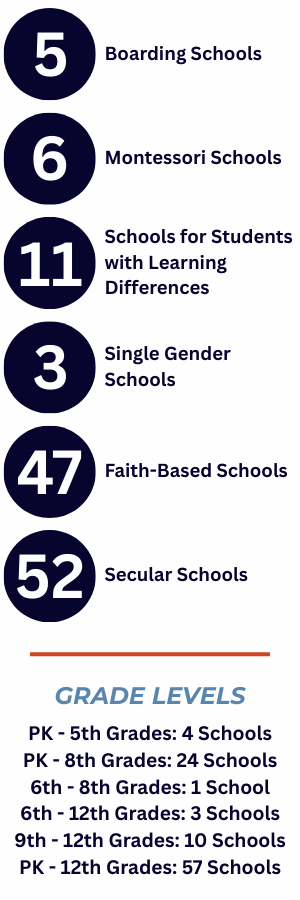
Independent schools come in all shapes and sizes to meet the diverse needs of families. They include:
- Grade Levels: Pre-school, lower, middle, and upper schools
- Structure: Day schools and boarding schools
- Environment: Single-sex and coeducational options
- Affiliation: Some schools are religiously affiliated, while others are secular.
- Educational Approach: Programs ranging from specific philosophies (like Montessori) to specialized support for learning differences
While they vary in size and educational approach, all independent schools share a common thread: the freedom to put the student’s growth and the school’s mission at the center of every decision.
Why Accreditation Matters: The Standard of Excellence
When selecting a school, you naturally look at the curriculum, the faculty, and the campus. However, a school's accreditation is the essential framework that ensures these programs meet a high standard of integrity. It is a voluntary, rigorous evaluation of how well a school meets both educational and operational standards, assuring you that your child's education is in reliable, vetted hands.
What is Accreditation?
Think of accreditation as a proactive "quality audit." While a school without it may still have high standards, an accredited institution has chosen to undergo an intensive assessment by external experts. This process validates that the school's financial stability, safety protocols, and academic rigor meet national requirements, moving beyond state-minimums toward true excellence.
What Does the Accreditation Process Look Like and Who Provides It?
Accreditation is a voluntary and ongoing process. Schools that opt for accreditation undergo periodic review and renewal by an accrediting organization to ensure they are consistently meeting - and exceeding - rigorous standards.
Where does the authority come from?
Most public and private K-12 schools are accredited through two main paths:
- State Oversight: Meeting standards set by a specific state’s department of education.
- Regional Agencies: Private, non-profit organizations recognized by the United States Department of Education (USDoE) and the Council for Higher Education Accreditation (CHEA).
These agencies establish criteria for educational programs and evaluate and analyze various facets of an institution to confirm that it meets high operational and academic standards.
Regional Standards in the Southeast
Each region in the US has its own accreditation associations. In our region, most high-quality independent schools are accredited by:
- Southern Association of Independent Schools (SAIS)
- Cognia
- Association of Christian Schools International (ACSI)
- Lumen
Why Choice Matters
Since accreditation is voluntary, some private schools choose not to participate. While a school without accreditation can still maintain a high academic threshold, choosing an accredited school provides your child with verified benefits—ensuring their hard work is recognized by other institutions and higher education boards nationwide.
Every NCAIS member school has earned accreditation, demonstrating its commitment to meeting rigorous standards of educational quality and integrity.
Step 1: Look Inward Before Looking Out
Every child learns differently. Before you start browsing websites, sit down as a family and define what "success" looks like for your student.
- Learning Style: Does your child thrive in a structured, traditional setting or a hands-on, progressive environment?
- Interests: Are you looking for a powerhouse athletics department, a world-class arts program, or specialized STEM labs?
- Environment: Does your child do better in a large, bustling hive or a small, nurturing "village?"
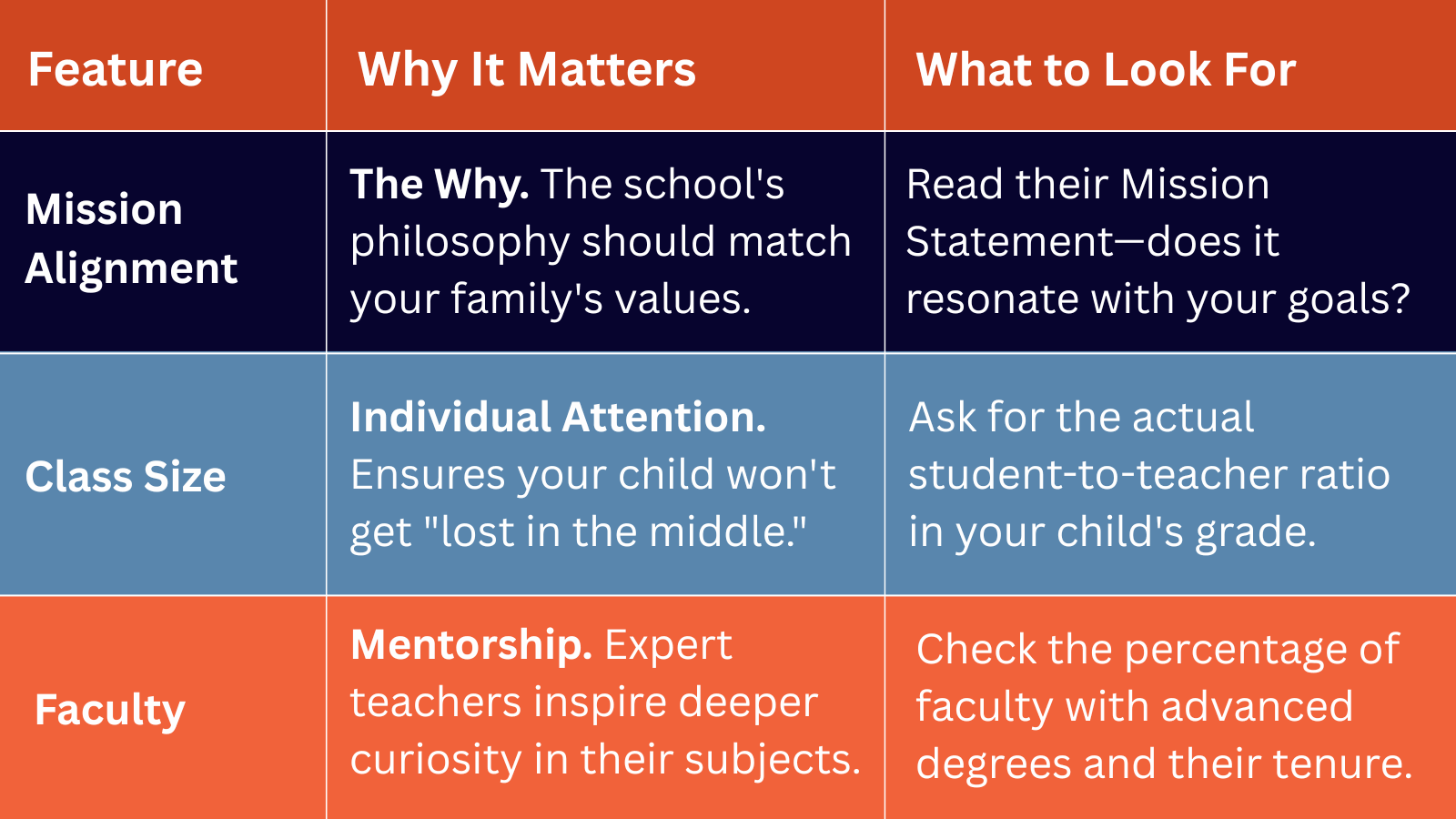
Step 2: Research the Essentials
Once you have your "must-haves," start narrowing down your list. Look for these indicators of a high-quality education:
Step 3: Experience the "Vibe"
A website shows a school's stats, but a visit reveals its soul. When you tour a campus, look past the shiny facilities and watch the people:
- Watch the Students: Are they engaged and curious? Do they seem comfortable being themselves in the hallways?
- Watch the Teachers: Do they speak to students with respect and enthusiasm? Are they facilitators of learning or just lecturers?
Step 4: Understand the Investment
Ensure you have a clear picture of the logistics early in the process:
- Financial Assistance & Affordability: Independent schools are an investment in your child's future, but that investment is often more accessible than many families realize. To ensure a diverse and talented student body, a variety of funding pathways exist to help bridge the gap between tuition and a family's budget. Please see the "Financial Assistance and Affordability" section below.
- The True Cost: Ask about "all-in" fees, including uniforms, books, transportation, technology, and extracurriculars.
- The Timeline: Most applications are due in the winter for a fall start. We recommend starting your search at least 12 months before you intend to enroll.
💡 Pro-Tip
The "best" school in the rankings may not be the best school for your child. Trust your intuition: if a school feels like a place where your child can grow into their best self, it’s usually the right choice.
Internal School Aid
School-based financial aid is assistance provided directly by a school to help families afford the cost of attendance. The grant aid is funded by the school's own budget, donations, or endowment, and is usually awarded based on a family’s demonstrated financial need.
Don't hesitate to ask about the financial assistance application process and deadlines early! Most schools require a separate financial aid application (often through platforms like Clarity or SSS) and have deadlines that coincide with the admissions calendar. We recommend starting the financial conversation at least 8 months before you intend to enroll.
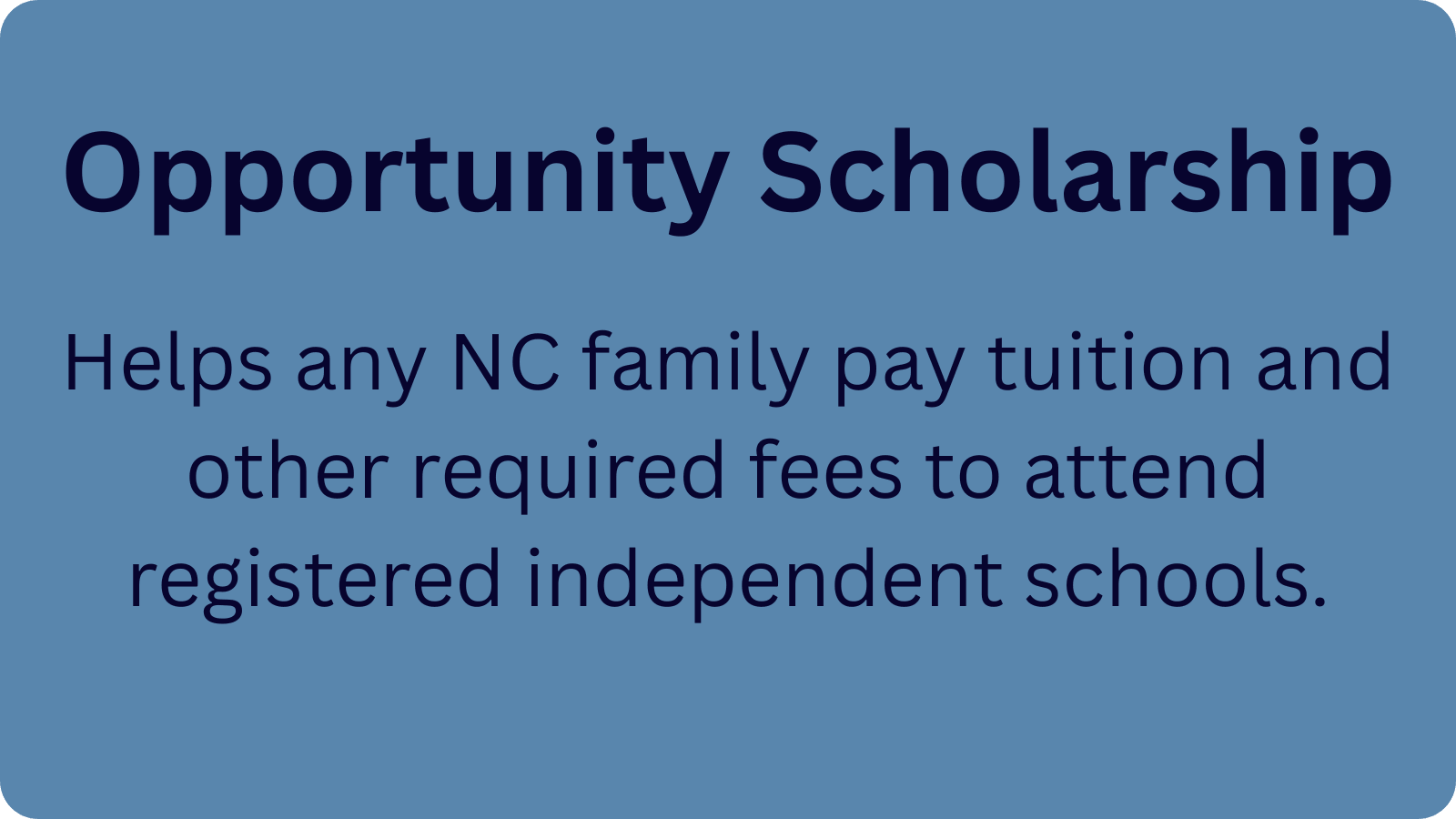
State Scholarship Programs
In addition to internal aid, many families in our region use state-funded programs designed to expand educational choice. Click each button below to learn more.
 |
 |